Introduction to Sparrows
If you’ve ever wondered what makes sparrows so common yet so fascinating, you’re in the right place. In the next few minutes, you’ll learn everything essential about these tiny birds that live so close to us.
The House Sparrow (Passer domesticus) belongs to the sparrow family Passeridae and is one of the most widely spread birds on Earth. Native to Europe and Asia, it now thrives across Africa and the Americas, adapting to both cities and rural areas.
This guide gives rare insights, simple biology facts, quick comparisons, and clear explanations—written to help you understand sparrows better than any other source.
Physical Characteristics
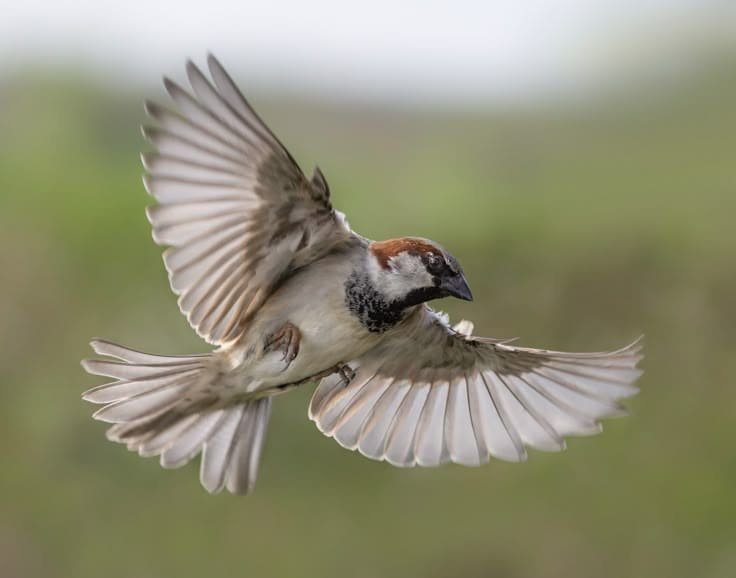
The House Sparrow has a small, sturdy body built for survival around humans. Most measure around 14–18 cm long and carry a weight of 24–39.5 g, which keeps them light and quick on the move. Their rounded head, strong chest, and short tail make them compact, letting them squeeze into tiny spaces when nesting.
Their stout, cone-shaped bill is a seed-crushing tool. Researchers note that males appear darker with a black throat in breeding months, while females stay brownish and plain, helping them hide from predators. Juveniles look softer and paler, with a light yellow bill before it darkens with age.
Physical Details
Body Shape: Compact with a wide chest for balance in short flights
Length: Around 14–18 cm (5.5–7.1 in)
Weight: Light; approx. 24–39.5 g (ideal for quick takeoff)
Wingspan: 19–25 cm (7.5–9.8 in) for steady gliding
Bill Function: Short and conical, specially shaped to crack seeds
Distinguishing Features
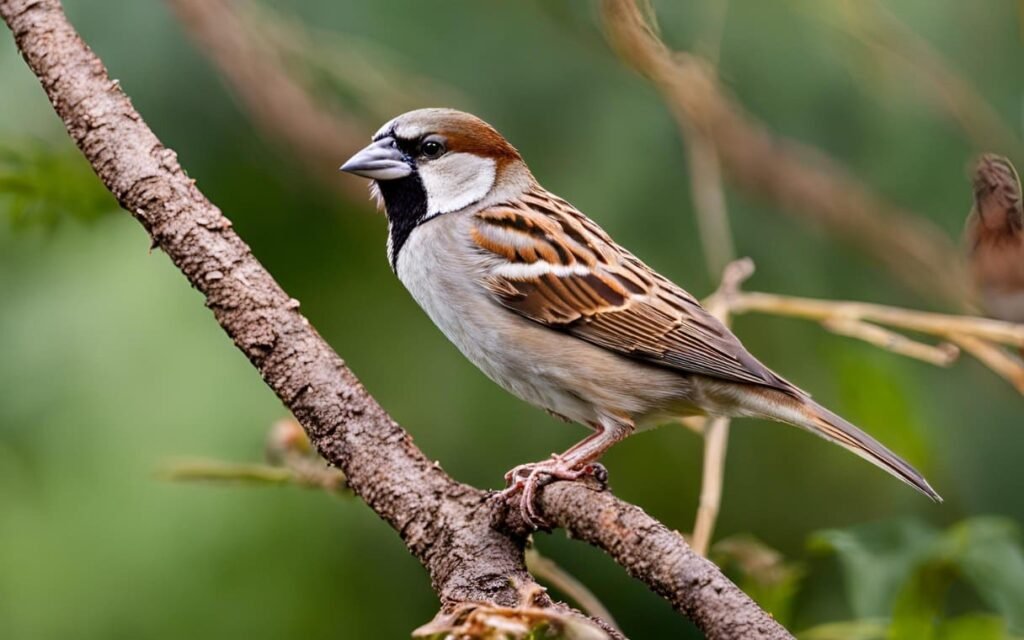
Males show a black bib and chestnut brown head, while females lack the bib and have simpler markings.
Juveniles look similar to females, with paler grey and brown tones.
A pale yellow stripe behind the eyes helps in quick identification.
The short, chunky bill is a key sign, even in mixed flocks.
Pale grey underparts and brown backs are common in both sexes, though males appear richer in tone.
Distribution and Habitat
Sparrows evolved as Old World species native to parts of Africa, Asia, and Europe, but they later spread and became naturalized across the Americas and Australia. The House Sparrow now lives in many regions because it adapts extremely well to human environments. Researchers note that this species has one of the widest ranges among small birds.
In nature, sparrows occupy open woodlands, grasslands, scrublands, and even deserts. Yet you are most likely to see them around homes, buildings, and parks. They thrive in cities and neighborhoods, especially where food sources exist. If you place a backyard feeder, you may attract them in large numbers and enjoy viewing these birds up close.
Some sparrows, like the Savannah Sparrow, migrate from Canada to Mexico each year. However, House Sparrows remain in the same location year-round. Migration peaks from February to May in spring and August to November in fall, depending on species and climate.
Behavior and Social Structure
House Sparrows are highly social birds that prefer living close to people. Experts observe them nesting in groups, feeding together, and even defending shared food spots. You often see them chatting loudly in urban flocks because sound helps them stay connected and safe. They rarely live far from homes, shops, or warehouses because human settings provide steady food and shelter.
Researchers note that sparrows show surprising adaptability. They learn to take food scraps, catch insects at night, and even reuse nests built by other birds. Their calls are short and sharp, allowing quick communication within the group. Although they were introduced successfully to many regions worldwide, their population has fallen sharply in some places. Some blame pollution, changing farming practices, or loss of nesting spots, but the exact cause remains unclear.
Quick Behavior
Nest and raise young in close colonies
Non-migratory; live year-round in one region
Communicate with constant short calls
Forage together and watch for predators
Thrive in the company of humans
Diet and Feeding Habits
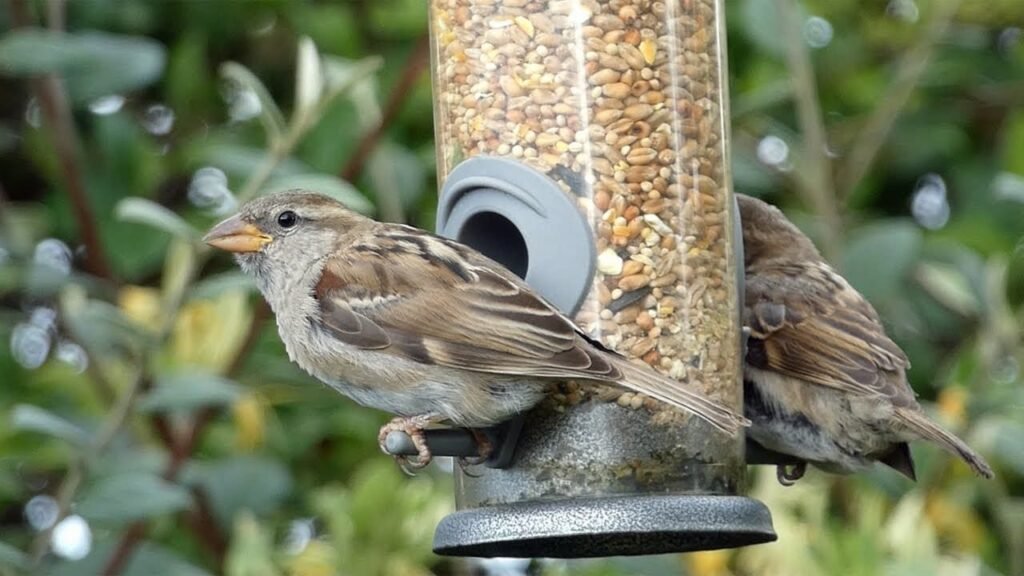
House Sparrows eat whatever their surroundings offer, which is why you see them foraging in cities and farms. Adults feed mostly on seeds and grains, especially in late summer when crops ripen. But researchers note that young chicks need protein, so the parents hunt insects and tiny spiders for them. Many people observe sparrows at backyard feeders because they quickly learn new food sources and adapt to human environments.
Experts observe them switching diets with the seasons. In warm months, they chase insects, sometimes even catching moths attracted to lights at night. In colder months, they rely more on seeds and fruit. If you keep feeders, you’ll notice they return in small groups, share food, and scatter seeds (which helps plants spread naturally).
Common Feeding Habits
Seeds and grains for adults; insects for chicks
Catch insects in spring and summer
Switch to fruits and seeds in cold months
Learn to use suspended feeders and hopper feeders
Come back regularly to reliable food spots
Reproduction and Lifespan
House sparrow nesting begins in spring when the male starts building a nest in cavities or ledges to attract the female. Once she accepts, she helps complete the structure. The female typically lays 3–5 eggs, and the sparrow’s incubation period lasts about 12–15 days. Both parents share duties; researchers often see males guarding while females warm the eggs.
Baby sparrows grow quickly. After hatching, the chicks become fledglings and leave the nest in about 10–14 days. Pairs are productive, often raising 2–3 broods between April and August, depending on climate and food availability.
The house sparrow’s lifespan varies with the environment. In the wild, most live around 2–5 years, though one recorded bird survived 13 years, 9 months. In captivity, these birds may reach 7–14 years, showing how shelter and diet strongly affect longevity.
Predators, Threats, and Conservation
House Sparrows face danger from predators like hawks, cats, and snakes. Small birds often lose chicks and eggs in open nests. Experts observe more losses in crowded urban places where cats hunt frequently. You may see sparrows quick hide in bushes; it is a simple survival behavior.
The bigger threat is population decline. Studies show that sparrow numbers in the UK have dropped nearly 60% over the past 45 years. Almost 30 million birds have vanished since 1970, which is why they appear on the Red List of Conservation Concern. Once common in gardens, they are now much rarer in many regions. Biologists note that habitat loss and fewer insects directly reduce breeding success.
Other sparrow species are also struggling. Grasshopper Sparrow is listed as Near Threatened mainly due to habitat loss. Bachman’s Sparrow is Vulnerable as its habitat continues to degrade.
How you can help sparrows:
Plant native shrubs for safe nesting
Avoid pesticide use to protect insects
Provide clean water and seeds regularly
Interesting Facts
Once Britain’s most common bird, sparrows crashed in London, where three-quarters vanished between 1994–2000; the exact cause remains unclear.
They have long been connected with humans, even reported living entire lives inside warehouses and deep underground coal mines.
Introduced species thrive worldwide — North America, South America, Africa, Australia, and New Zealand.
Researchers found 15% of young sparrows come from a different male than expected, showing hidden “partner swapping.”
During the pandemic, white-crowned sparrows sang 30% softer when city noise dropped, showing fast sound adaptation.
They fly with constant flapping, reaching around 28 mph and rarely gliding.
Sparrows take dust baths, defend the spot, and hop instead of walking — a quirky behavior you may notice in your yard.
Relationship with Humans
Sparrows have lived close to people for thousands of years, often forming a friendly yet “love-hate” relationship. Their bold nature lets them settle in cities, markets, and backyards, where you may notice them waiting near food stalls or bird feeders. Researchers note that sparrows adapt quickly to human life, which is why they spread successfully to North America, South America, Australia, New Zealand, and parts of Africa.
Many people enjoy their chirping and companionship, especially in busy urban areas. However, human actions also shape their survival. When buildings remove nesting gaps or food becomes scarce, sparrow numbers can drop. Still, feeding them seeds or allowing small nesting spaces can support these tiny neighbors that choose to live so closely with us.
FAQs
1) What do House Sparrows eat?
Sparrows mainly eat seeds and grains — that’s why you often see them around farms, roofs, or food scraps.
Baby sparrows get soft insects because they need fast growth. Adults switch to grains, bugs, and crumbs depending on what’s available.
2) How long do House Sparrows live?
Most live 2–5 years in the wild because predators and weather affect them.
But when safe, they can reach 7–14 years, and one lived nearly 14 years, which is an incredible record.
3) Where do House Sparrows build their nests?
They choose small hidden spaces like house vents, tree holes, ledges, and roof corners.
They use dry grass, feathers, string, and even paper to make cushioned nests that protect their eggs and chicks.
4) How long does it take baby sparrows to leave the nest?
Baby sparrows grow fast — they leave the nest within 10–14 days.
Parents keep feeding and protecting them nearby until they learn to fly confidently.
Author Bio:
Ahmed is a wildlife researcher and long-time bird observer who studies small bird behavior, feeding patterns, and urban ecology. He focuses on turning scientific information into simple, accurate guides that help everyday readers understand animals better. His work combines field observations with trusted research to provide clear, reliable facts about birds like sparrows.