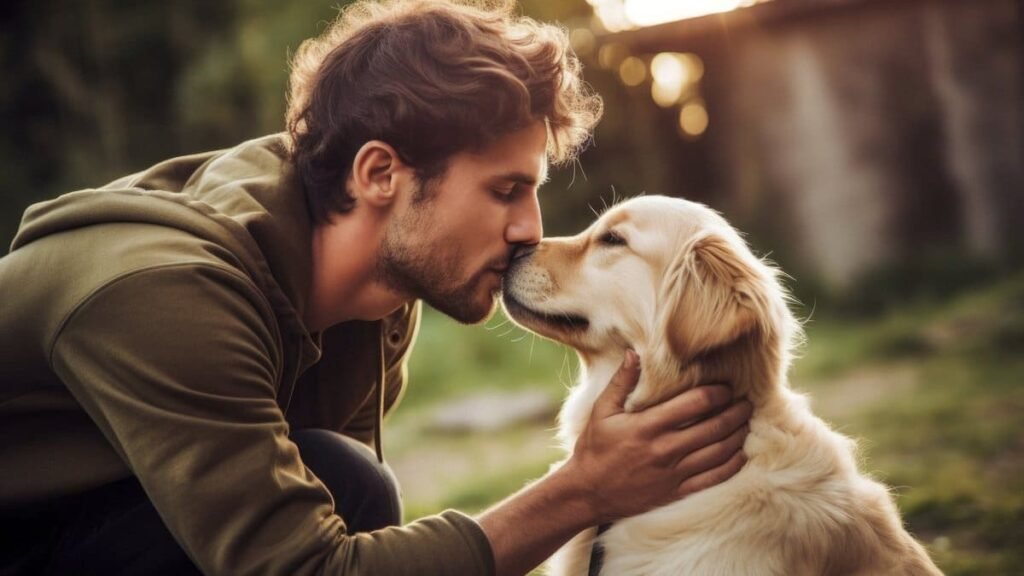
Have you ever been relaxing when your dog suddenly leans in and covers your face with wet kisses? It can feel sweet, confusing, or even a little awkward. Many dog owners wonder what their pet is really trying to say in that moment. Is it love, habit, or something deeper? Understanding why dogs lick your face helps you read your dog’s emotions more clearly. This common behavior is not random; it connects to instinct, communication, and bonding. Knowing the reasons can help you respond in a way that supports both trust and comfort.
Why Dogs Lick Your Face
Dogs lick your face as a natural way to communicate affection, attention, and social connection. This behavior comes from wolves and wild dogs, where pups lick their mother’s face to signal hunger and stimulate food delivery. In domestic dogs, licking human faces remains a friendly, non-threatening signal. When people laugh, pet, or respond warmly, dogs learn that face licking leads to positive outcomes and repeat it.
- Rooted in early puppy survival behavior
- Signals friendliness, appeasement, and affection
- Reinforced by positive human reactions
Is It Normal for Dogs to Lick Your Face?
Face licking is normal dog behavior and part of a dog’s natural social communication. Puppies lick faces to bond, show affection, and express submissive or calm signals. In adult dogs, this behavior reflects emotional bonding, friendliness, or reassurance. Experts observe that dogs use licking as body language to communicate feelings, not dominance. Dogs often adjust this routine behavior based on your reaction, comfort level, and individual personality differences.
Main Reasons Dogs Lick Your Face

Dogs lick your face for clear behavioral reasons linked to instinct, social communication, and learning. This behavior starts early in life and continues into adulthood. Face licking often appears during greetings, calm moments, or emotional interaction. Understanding the reason helps you read your dog’s feelings, intent, and comfort level more accurately.
Natural Instinct From Puppyhood
From birth, mother dogs lick puppies to stimulate breathing, clean them, and help them survive. Puppies lick around the mother’s mouth to signal hunger and trigger food delivery. This instinct remains strong in both feral and domestic dogs. In pack life, mouth licking also serves as a submissive gesture that promotes peace and communication.
Affection & Emotional Bond
Many dogs lick faces to show affection and emotional bonding. Face licking helps dogs feel close to their owners and share emotional states. Experts observe this behavior during calm, happy moments. Positive interaction releases feel-good chemicals, creating comfort, reassurance, and a stronger social bond between dog and human.
Respect or Submissive Behavior
Face licking can signal respect within the social hierarchy. Subordinate dogs lick dominant members to show recognition and maintain peace. This submissive behavior comes from the natural pack structure seen across the canidae family. It is not weakness, but a calm, instinctive way dogs communicate social boundaries and avoid conflict.
Taste, Smell & Skin Salt
Dogs also lick faces because of taste and scent. Human skin carries salt from sweat, natural oils, and skin cells. Faces may hold food particles, bacteria, or morning breath smells. Dogs use their tongue and nose to explore these scents, making licking a normal sensory response rather than pure affection.
Attention-Seeking or Learned Habit
Dogs learn quickly that licking brings attention. If face licking once caused laughter, petting, or play, the behavior gets reinforced. Over time, dogs repeat what worked before. This conditioning turns licking into an attention-seeking habit shaped by human reaction and emotional feedback.
Why Does My Dog Lick My Face but Not Others?
Dogs are selective with face licking because it reflects trust and an emotional bond. Your dog recognizes your scent, reads your body language, and feels safe with you. Dogs lick familiar owners more during calm moments, showing comfort rather than excitement.
- Strong bond and closeness
- Familiar human scent recognition
- Higher trust and reassurance level
Why Do Dogs Lick Your Face in the Morning?
Dogs often lick faces first thing in the morning because scent cues are strongest then. Overnight, mouth odor and accumulated bacteria create a smell that invites sniffing, and licking follows. Many dogs initiate contact with a trusted family member at wake-up, using this early morning interaction to explore scent, gather information, and gently reconnect after hours of rest.
Is It Safe to Let Dogs Lick Your Face?
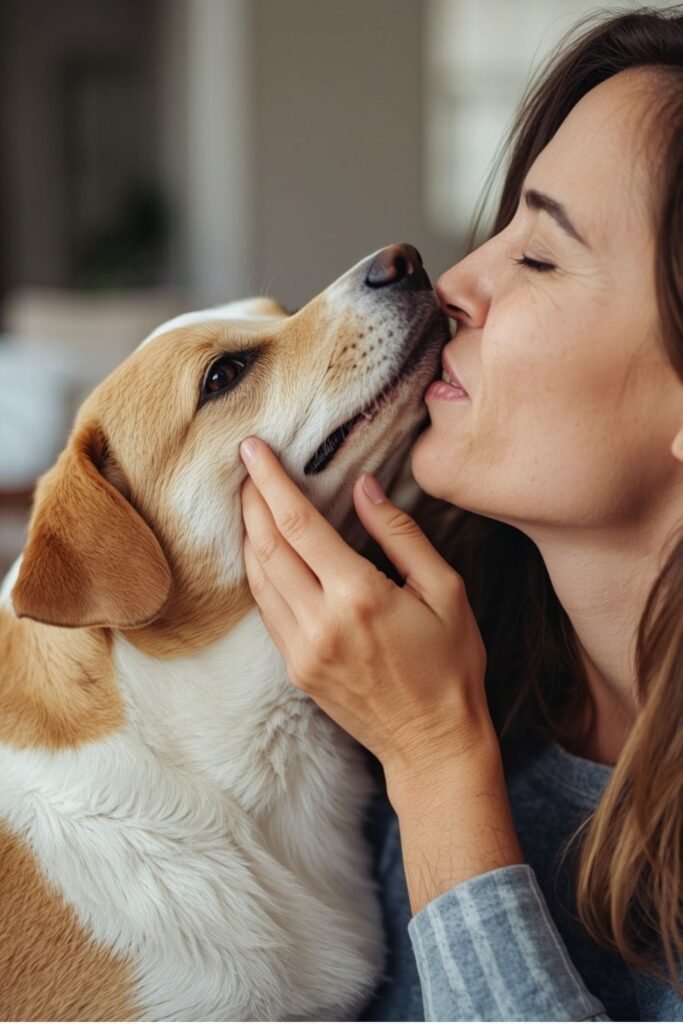
Letting dogs lick your face is usually low-risk, but it depends on health and hygiene. A dog’s mouth carries germs and bacteria, including rare ones like Capnocytophaga. In calm moments, licking can soothe both the dog and the owner emotionally. Many pet parents allow it briefly, then wash up afterward.
Pros
- Can be soothing and strengthen emotional bonding
- Generally safe for healthy adults
Cons
- Risk if you have an open wound or a weakened immune system
- Possible infection or allergic reaction; wash with warm water and antibacterial soap
How to Gently Stop or Limit Face Licking
- Stay calm and ignore the licking. Your reaction matters. Laughter, screams, or smiles can reinforce the habit and signal that licking makes you happy.
- Gently turn away or step back. This removes attention and breaks behavior reinforcement without causing stress.
- Redirect your dog to a toy or give a simple command. This provides a clear, positive outlet.
- Reward only calm behavior. Experts observe that dogs learn faster when the owner’s feedback is consistent.
- Set comfort levels early. Clear boundaries help limit persistent licking without harming trust.
FAQs
Why does my dog lick my face aggressively?
Aggressive-looking licking is usually excitement or stress, not anger. When emotions run high, dogs use fast, repeated licking to calm themselves or you. This often happens after long separations or overstimulation, especially in high-energy dogs.
Why is my dog licking me so much all of a sudden?
A sudden increase in licking usually signals a change. It may be anxiety, boredom, routine shifts, or reinforced attention. Experts observe that dogs repeat behaviors that get a reaction, so even small responses can quickly turn licking into a habit.
Why do dogs lick hands, feet, or ears?
Hands, feet, and ears carry strong scents, sweat, and skin chemistry. Dogs explore through taste and smell. In daily life, dogs often target these areas to gather information, show affection, or seek comfort through familiar human scent.