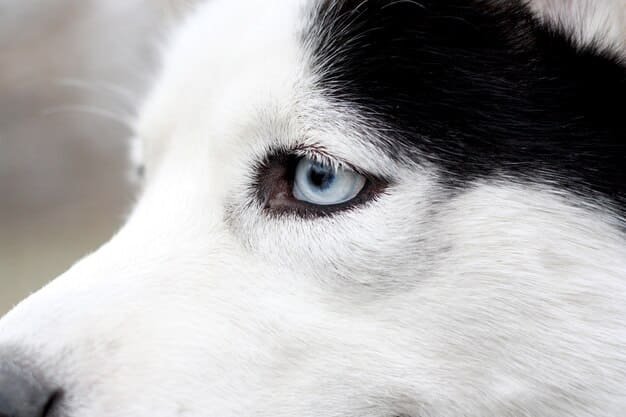
Many people think dogs see only in black and white — but that’s a myth. Dogs can actually see some colours, mainly blue and yellow. Their eyes are made to spot movement, see in dim light, and notice things at the edges that humans often miss.
Because dogs have more light-sensitive cells and fewer colour cells, they have great night vision but see fewer colours. This helps them chase a ball or spot a squirrel quickly. Dogs also use their smell and hearing, along with sight, to understand the world. So, while they don’t see as many colours as we do, their vision is perfect for how they live and play.
Understanding How Dogs’ Eyes Work
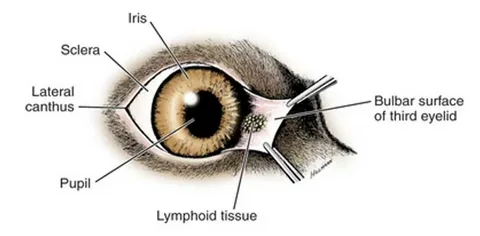
A dog’s eyes work like ours, but are built to see better in low light and spot movement. The sclera is the tough, white part that protects the eye, and the cornea allows light to enter. The iris controls the amount of light entering by adjusting the pupil, while the lens focuses that light onto the retina, where vision begins.
In the retina, rods help dogs see in dim light and detect motion, while cones let them see colour — though they see fewer colours than humans. Dogs also have a tapetum lucidum, a shiny layer that improves night vision and gives their eyes that glowing look in the dark.
Another unique feature is the third eyelid, which helps protect the eye and keep it moist. Overall, every part of a dog’s eye works together to help them stay alert, track movement, and see well at night.
Just like their sharp eyes, dogs also rely on an incredible sense of hearing — learn more in our guide on how dogs’ sense of hearing works.
How Do Dogs See the World Compared to Humans?
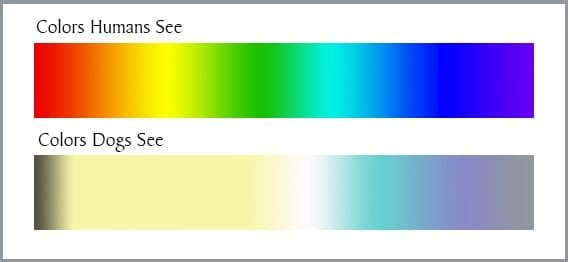
Dogs and humans see colours very differently. Humans have three colour receptors — red, green, and blue — but dogs only have two, for blue and yellow. That’s why dogs are red-green colourblind, explains Dr Alison Meindl from Colorado State University. So, a red toy on green grass might look brownish-yellow to your dog.
However, dogs see much better in the dark. According to Dr Jay Neitz from the University of Washington, dogs have more light-sensitive cells in their eyes, giving them strong night vision and helping them spot movement quickly. While we see more colours, dogs are experts at noticing motion and light changes — skills that once helped them hunt and now help them navigate the world.
Can Dogs See Colour?
For a long time, people thought dogs could only see in black and white. That is not true. Dogs can see colours, but not as brightly as humans do. They have two colour receptors in their eyes that help them see blue and yellow, but not red and green. This means a red ball might look brown or grey to a dog, while blue and yellow toys are easier for them to spot.
Dogs’ eyes are made to notice light and movement more than colour. They have more light-sensitive cells, which help them see better in the dark. They also have a reflective layer called the tapetum lucidum that bounces light inside the eye. This helps them see clearly at night and causes their eyes to shine in the dark.
Because of this, dogs can see very well in low light, especially during dawn and dusk — just like their wild ancestors who were most active at those times.
Why Dogs See Better in the Dark?
Dogs can see well at night, even in places where humans find it hard to see. This is because their eyes have more rod cells, which sense light and movement, and fewer cone cells, which detect colour. So, while dogs do not see a wide range of colours, they can easily spot shapes and movement in the dark.
Another reason dogs see better at night is a special reflective layer at the back of their eyes called the tapetum lucidum. It works like a mirror, sending light back through the eye so the rods can use it again. This reflection makes their eyes appear to glow when light shines on them, like from headlights or a torch. This natural design helps dogs move around and see in very low light, an ability that once helped their wild ancestors hunt at dawn and dusk.
How Sharp Is a Dog’s Vision?
Dogs don’t see as clearly as humans do. People usually have 20/20 vision, but most dogs have around 20/75 vision. This means that something we can see clearly from 75 feet away would only look clear to a dog from 20 feet. Even though their eyesight is not very detailed, dogs are excellent at noticing movement and judging distance. Some breeds, such as greyhounds, whippets, and Labrador retrievers, have sharper vision, closer to 20/20. This helps them perform well in hunting, racing, and retrieving activities.
Dogs’ Peripheral and Side Vision
Dogs have a much wider field of vision than humans. While people see about 180 degrees, most dogs can see up to 240 degrees, and sighthounds like Greyhounds can reach 290 degrees. Their side-positioned eyes help them spot movement from all around, keeping them alert and aware of their surroundings.
How Does a Dog’s Vision Change with Age?
As dogs get older, their eyes may look a bit cloudy. This is often due to a harmless condition called lenticular sclerosis, which happens when the lens hardens with age. It gives a bluish haze but usually doesn’t affect vision much.
Sometimes, older dogs develop cataracts, which are a thicker clouding of the lens that can make vision blurry or dim. Some breeds of dogs with diabetes are more likely to get them. Another condition, called progressive retinal atrophy (PRA), slowly damages the retina and can cause night blindness. Regular vet checkups are important to spot these problems early and help protect your dog’s eyesight as they age.
How Puppy Vision Develops?
Newborn puppies are born blind with closed eyes and depend on smell and touch to find their mother. Their eyes start to open after about 10 to 14 days, but vision stays blurry for a while. By four to six weeks, they can see shapes, light, and movement well enough to explore and play as their sight continues to develop.
Genetic and Health Factors Affecting Vision
A dog’s eyesight can be affected by genes and health issues. Some breeds are born with risks of eye problems like cataracts, glaucoma, or progressive retinal atrophy, which can slowly cause vision loss. Diabetes can also harm the eyes and lead to cataracts. Regular eye checkups and good diabetes care help keep a dog’s vision clear and healthy.
How to Check and Care for Your Dog’s Vision?
Dogs can’t take eye tests like humans, so vision problems are usually found through observation. If your dog bumps into things, hesitates in new places, or struggles in dim light, their eyesight may be weak. You can try a simple home test by seeing how they move around obstacles. For proper care, veterinarians can check their eyes and treat issues like cataracts. Regular checkups help keep your dog’s eyes healthy.
Fun & Lesser-Known Facts About Dog Vision
Dogs possess some remarkable visual abilities that many people are unaware of. They don’t have real eyebrows, but their brow ridges and facial muscles help show emotions, which is why we can easily “read” their expressions. Research in The Royal Society Biological Sciences suggests dogs may even see parts of the ultraviolet (UV) light spectrum — something humans can’t see. This helps them notice tiny changes in light and movement, making their vision more complex and impressive than we once thought.
Final Thoughts
Dogs may not see the world in bright colours, but their vision is perfectly suited to their way of life. They’re great at noticing movement, seeing in dim light, and spotting details we often overlook. More importantly, dogs use their eyes to read our faces, moods, and emotions. So even if they don’t see the world as vividly as we do, they see us with more love, trust, and clarity than anyone else.
Want to discover more about man’s best friend? Check out these amazing facts about dogs.
About The Author
I’m Ahmed, a passionate writer who loves uncovering fascinating facts about the animal world. From loyal dogs and curious cats to nature’s most surprising creatures, I enjoy exploring how they see, think, and feel. Through my blogs on The Factonomy, I aim to share engaging, easy-to-understand insights that spark curiosity and deepen our appreciation for the amazing animals we share our world with.