
Found only in the Americas, hummingbirds are among nature’s most dazzling creatures—tiny, fast, and brilliantly colored. Belonging to the family Trochilidae, these birds are known for their diminutive size and extraordinarily speedy flight that allows them to hover in mid-air, move backward, or dart between flowers with precision unmatched by any other bird.
Across the Western Hemisphere, more than 300 hummingbird species thrive, ranging from the icy peaks of Alaska to the southernmost tip of Tierra del Fuego. In North America, the Ruby-throated and Rufous Hummingbirds are the most familiar species, while the Glittering Starfrontlet, Chilean Woodstar, and Juan Fernández Firecrown are some of the rarest and most threatened.
Adapted to an astonishing variety of climates and environments, hummingbirds inhabit everything from desert scrublands to the cool páramo regions above the Andes treeline, soaring at heights of 10,000 feet or more. Yet, even these resilient birds face increasing habitat loss, putting several species at risk of extinction. Conservation programs led by organizations like American Bird Conservancy (ABC) and international partners are working to protect these ecological and cultural treasures before they disappear.
Small as they are, hummingbirds represent the perfect blend of beauty, biology, and brilliance. As you explore these interesting facts about hummingbirds, you’ll discover why scientists and bird lovers alike are fascinated by these tiny wonders—from their flight mechanics and energy demands to their vibrant colors and adaptive genius.
What Are Hummingbirds?
Hummingbirds are small, fast-moving birds belonging to the avian family Trochilidae — a unique group closely related to swifts. They represent one of the most specialized families in the bird world, known for their exceptional flight adaptations and vibrant coloration.
These birds are among the smallest bird species, typically weighing between 2 to 20 grams. Their long, narrow bills and saber-like wings are perfectly designed for precision feeding and hovering in midair — a skill that few other vertebrates can perform. Their wing structure allows them to move forward, backward, or even remain suspended while feeding on nectar.
Male hummingbirds are particularly striking because of their iridescent feathers, especially the colorful gorget — a patch of reflective plumage on the throat and upper chest. This shimmering display changes color depending on the angle of sunlight, producing metallic hues that range from emerald green to ruby red. These optical effects, created by microscopic feather structures, help males attract mates and signal vitality.
Physical Features and Anatomy
Despite being among the smallest birds on Earth, hummingbirds are engineered for performance and precision. Most species weigh only 2 to 20 grams, with the Bee Hummingbird measuring just about an inch long. Their lightweight skeleton and saber-like wings enable unmatched aerial agility. With 14–15 neck vertebrae—double that of most mammals—they can tilt and maneuver their heads swiftly while feeding. Their tiny legs and weak feet serve mainly for perching, not walking. Every aspect of their anatomy reduces weight and maximizes flight control, allowing them to hover with pinpoint accuracy.
Beneath their shimmering feathers lies a body designed for extreme energy use. A hummingbird’s heart makes up about 2.5% of its body weight, one of the highest ratios among vertebrates, and beats up to 1,200 times per minute. This oversized heart, combined with rapid breathing and oxygen-rich blood, fuels their intense wingbeats. They have few taste buds and no sense of smell, relying instead on keen vision to find colorful, nectar-rich flowers. Even their salivary glands are specialized to assist in nectar feeding.
Their beauty and efficiency extend down to the microscopic level. Each iridescent feather acts like a prism, scattering light into vivid metallic colors that shift with the viewing angle — a phenomenon known as structural coloration. Meanwhile, their bifurcated (forked) tongue is a marvel of adaptation: flat and tubular with fringed, feather-like tips. It unfurls and retracts at lightning speed, drawing nectar through capillary action up to 13 times per second. This combination of color and feeding precision defines their survival strategy in every ecosystem they inhabit.
Fun Fact: A hummingbird’s entire body weighs less than a nickel — yet its heart and wings work harder than any other bird on Earth.
Flight and Speed
The flight of a hummingbird is nothing short of an aerodynamic masterpiece. These tiny birds can beat their wings anywhere between 720 and 5,400 times per minute, depending on the species. Their flight muscles account for nearly 25–30% of total body weight, compared to about 15% in most birds — a key reason for their exceptional maneuverability. In level flight, many species reach speeds of over 33 miles per hour, while their compact skeletons and energy-dense muscles sustain long periods of rapid motion. Each wing stroke generates power on both the up- and down-beat, giving them unmatched stability in midair — a feat no other bird can replicate with such precision.
Unlike typical flyers, hummingbirds are the only vertebrates capable of true sustained hovering — they can also fly backward, sideways, and even upside down. During courtship dives, males have been clocked at speeds exceeding 45 mph, while migratory species such as the Ruby-throated Hummingbird fly 18–20 continuous hours across the Gulf of Mexico, fueled by stored body fat and tailwinds. Even in the rain, they shake water from their heads 132 times per second while keeping direction steady, proving their remarkable control. These adaptations make the hummingbird one of nature’s most advanced flying machines, where every gram of muscle serves the rhythm of endurance and grace.
Fun Fact: The gentle “humming” sound that gives these birds their name comes from the rapid vibration of their wings slicing through the air.
Metabolism and Energy Use
Torpor is a temporary, sleep-like state that allows hummingbirds to conserve energy during cold nights or food shortages. These birds have one of the highest metabolic rates in the animal kingdom, burning energy rapidly as they hover and feed throughout the day. When temperatures drop or nectar is scarce, a hummingbird’s metabolic functions slow dramatically, its heartbeat plummets, and body temperature can fall from 105°F to around 70°F. Unlike true hibernation, torpor is short-term — usually lasting just a few hours — and can occur on any night of the year.
Because of their tiny size and minimal fat reserves, hummingbirds rely on torpor to avoid starvation and survive the night. Their feathers provide poor insulation, so this physiological “power-down” prevents fatal energy loss. At dawn, they “reboot” — warming up gradually and resuming their high-speed lifestyle of feeding and flight. This remarkable energy management system makes hummingbirds masters of metabolic efficiency, thriving in environments where few small animals could endure.
Fact: During torpor, a hummingbird’s heart rate may drop from over 1,000 beats per minute to fewer than 50 — an extraordinary adaptation for survival
Diet and Feeding Behavior
Hummingbirds thrive on a sugar-rich diet of flower nectar, which fuels their incredibly high-energy lifestyle. They depend on blooming plants that vary with season and elevation — feeding in lowland meadows in spring and moving to mountain flowers by summer. Along with nectar, these tiny birds also eat small insects and spiders, essential sources of protein, fat, and minerals. They often catch flying insects mid-air or pluck them from leaves to feed their nestlings during the breeding season. In northern regions, some even sip sugary sap from sap-wells left by woodpeckers and sapsuckers when flowers are scarce.
Using a long, forked tongue, a hummingbird can lap nectar up to 13 times per second while hovering in place. Their wings beat up to 80 times per second, giving them unmatched precision as they feed. The slender bill fits perfectly into tubular blossoms, making them key pollinators for many native plants. Did you know? The tongue’s tip splits into two tiny tubes that trap nectar through capillary action — a feature found in no other bird.
Because of their rapid metabolism, hummingbirds must eat almost constantly, consuming nearly twice their body weight in nectar each day. When food is limited or temperatures drop, they conserve energy by entering torpor, a deep rest state described in the previous section. Gardeners can support their feeding by offering nectar feeders or native flowering plants, especially during migration seasons.
Habitat and Distribution
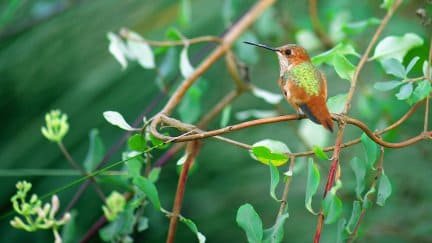
Hummingbirds are found only in the Americas, with over 340 known species ranging from southern Alaska all the way to Tierra del Fuego at South America’s tip. They occupy nearly every type of environment — from sea level deserts to Andean mountain slopes rising above 16,000 feet. Most species thrive in Central and South America, especially the tropical regions of the Andes, where flower diversity and mild climates provide ideal feeding conditions. In the United States, around 17 species occur regularly, including the Ruby-throated Hummingbird, which breeds east of the Mississippi and migrates to Mexico for winter.
Within their range, hummingbirds adapt to a wide variety of habitats and altitudes — from dense rainforests and open meadows to dry scrublands and suburban gardens. Some, like the Chilean Woodstar, prefer coastal deserts, while high-elevation species in the Andes thrive in cool alpine environments. They are highly mobile and opportunistic, tracking flowering seasons and nectar-rich plants as they bloom through the year. This flexibility allows them to survive in diverse climates and landscapes, making hummingbirds one of the most widely distributed bird families in the New World.
Migration and Seasonal Behavior
Every spring, millions of hummingbirds migrate northward, following the seasonal bloom of flowers from Central America into the United States and Canada. These tiny birds rely on instinct and environmental cues — such as daylight and temperature — to time their journeys perfectly with the appearance of nectar-rich plants. The Ruby-throated Hummingbird performs one of the most remarkable migrations of all, flying 500 miles nonstop across the Gulf of Mexico, a journey that takes about 20 hours of continuous flight. Before departure, each bird nearly doubles its body fat, storing vital energy for the long trip ahead.
Unlike most migratory birds, hummingbirds travel alone, not in flocks. Males usually migrate first, followed by females and young birds. Along their route, they pause frequently to feed and refuel, hovering at flowers or feeders to maintain strength. Their incredible navigation skills allow them to return to the same breeding and wintering sites year after year. This pattern of seasonal movement ensures access to abundant food sources and favorable climates, showcasing the endurance and precision that make hummingbird migration one of the most extraordinary phenomena in the bird world.
Reproduction and Life Cycle
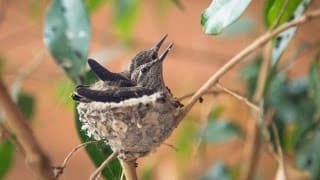
During the breeding season, male hummingbirds perform dazzling aerial courtship displays to attract females — diving, hovering, and making sharp turns while producing a buzzing hum with their wings. Once mating occurs, the male hummingbird moves on to seek another mate, leaving the female solely responsible for nesting and raising the young. This independent behavior is typical across all species, from the tiny Ruby-throated Hummingbird to larger tropical varieties.
Female hummingbirds are meticulous builders. They construct delicate, cup-shaped nests about the size of a walnut shell, using plant fibers, lichen, and spider silk to make them soft yet flexible. These nests are often attached to tree branches or sheltered shrubs, camouflaged perfectly within their surroundings. The elasticity of spider silk allows the nest to expand as the chicks grow, an ingenious natural design that protects the brood.
Each female typically lays two pea-sized eggs, among the smallest in the bird world. The incubation period lasts around two weeks, after which the baby hummingbirds remain in the nest for nearly three weeks before their first flight. By the next breeding season, many young birds return to their natal areas, continuing the remarkable hummingbird life cycle.
Behavior and Social Traits
Hummingbirds are among the most intelligent and alert birds in the avian world. They possess an exceptional spatial memory, allowing them to remember the exact location and timing of each flower they visit. This ability helps them maximize energy intake while minimizing effort — crucial for their high-energy lifestyle. During daily feeding, they make brief stopovers to refuel and even adjust their routes based on nectar availability. Some tropical species form leks, where males gather to display and sing scratchy songs to attract females, showcasing complex social behaviors rarely seen in such small birds.
Despite their delicate appearance, hummingbirds are remarkably territorial and feisty. Males aggressively defend their feeding zones, chasing intruders — even larger birds — away from favorite flower patches or feeders. These high-speed chases and aerial dives display both power and precision, traits that ensure control over the best nectar sources. Their unsociable nature extends beyond feeding; pair-bonds are brief, and females alone raise the young. This intense territory defense and energy management allow hummingbirds to thrive across diverse habitats, from tropical forests to mountain meadows.
Threats and Conservation
Although hummingbirds are marvels of adaptation, many species face increasing threats from habitat loss, climate change, and urban expansion. Deforestation in the tropical mountains of Central and South America has reduced critical feeding and nesting sites, particularly for rare species such as the Chilean Woodstar and Juan Fernández Firecrown. In North America, collisions with windows, attacks by domestic cats, and predation from larger insects or spiders also pose daily risks. Even small changes in flowering patterns caused by rising temperatures can disrupt the precise timing of migration and breeding, leaving these birds without vital nectar sources.
Conservation programs across the Americas are working to protect both hummingbirds and the ecosystems they depend on. Initiatives like the Smithsonian Migratory Bird Center’s Bird Friendly® Coffee encourage shade-grown farming, which preserves flowering trees and canopy diversity in tropical regions. Organizations such as Audubon and American Bird Conservancy (ABC) collaborate with local partners in Peru, Mexico, and Central America to safeguard migratory corridors and promote habitat restoration. By supporting native gardens, maintaining feeders responsibly, and choosing sustainable coffee, individuals can play a part in hummingbird conservation—helping these tiny pollinators thrive for generations to come.
Evolution and Natural History
Fossil evidence shows that hummingbirds evolved from swift-like ancestors roughly 22 million years ago, developing their unique hovering flight through gradual anatomical adaptations. Over time, specialized wing joints, lightweight bodies, and rapid metabolism allowed them to sustain midair feeding — a behavior unmatched by other birds. Their long, slender bills and extendable tongues evolved in close partnership with flowering plants, creating one of nature’s finest examples of co-evolution between birds and blossoms.
Today, more than 330 hummingbird species exist, with about 95% found in Central and South America and only a few north of Mexico. Their greatest diversity occurs in the tropical Andes, where the range of habitats — from arid lowlands to mountain forests — fueled rapid speciation. This remarkable evolutionary journey has made hummingbirds not only one of the most diverse bird families on Earth but also a key indicator of ecosystem health and pollination balance across the Americas.
How to Help and Attract Hummingbirds
Attracting hummingbirds to your garden is easy with the right mix of native plants, clean feeders, and safe habitats. Follow these simple, proven tips to welcome them year-round:
Plant nectar-rich flowers such as Bee Balm, Cardinal Flower, Trumpet Creeper, Coral Honeysuckle, and Columbine. These blooms mimic the natural food sources hummingbirds evolved with.
Set up feeders filled with a 1:4 sugar-water mix (one part sugar to four parts water). Avoid dyes or honey, and clean feeders weekly to prevent mold and disease.
Skip pesticides and herbicides — these harm both insects and nectar sources essential to their diet.
Create perching and shaded spots using small trees or branches where hummingbirds can rest and guard their feeding areas.
Keep flowers blooming all season by planting varieties that bloom in rotation, ensuring continuous nectar availability.
These steps not only support hummingbird health but also help sustain local pollination networks and biodiversity in your area.
Amazing Hummingbird Facts
Hummingbirds are the smallest migrating birds—some species travel thousands of miles completely solo each year.
Their hearts can beat over 1,200 times per minute, powering intense bursts of flight.
The only birds that can fly backward, sideways, and hover in one spot with precision.
Their wings beat between 720 and 5,400 times per minute, creating the trademark humming sound.
Despite having no sense of smell, they can see ultraviolet colors invisible to humans and favor red and orange flowers.
A hummingbird can consume up to twice its body weight in nectar daily to maintain its energy. Even in the rain, they shake their heads 132 times per second to keep their vision clear while flying.
Sources and References
- Cornell Lab of Ornithology – All About Birds – Comprehensive resource on hummingbird identification, habitat, and migration.
- Smithsonian Migratory Bird Center – Research on hummingbird migration, breeding, and conservation.
- National Audubon Society – Expert insights on North and South American hummingbird species and their ecological roles.
- BirdLife International – Global conservation organization providing species data and threat assessments.
- U.S. Fish & Wildlife Service – Migratory Bird Program – Official data on bird conservation and protected species.
- University of California, Davis – Hummingbird Research – Academic research on hummingbird physiology, flight, and behavior.
Author Bio
I’m Ahmed, an animal-science enthusiast and content writer who loves uncovering fascinating facts about wildlife. I explore how animals think, behave, and interact with their environment — from pets to the world’s most extraordinary species. Through my articles, I aim to simplify complex concepts and inspire readers to appreciate the incredible world of animals.