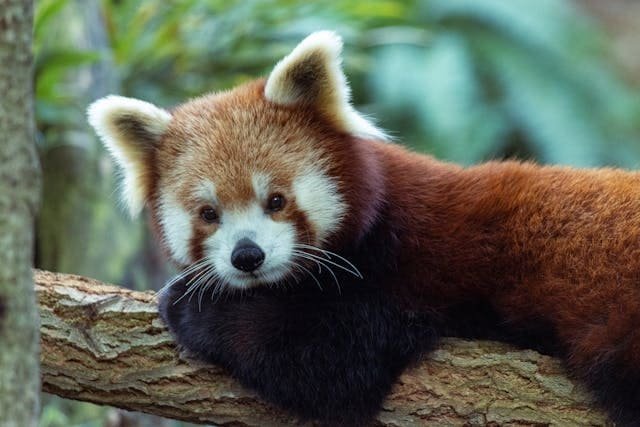
Red pandas often confuse people — are they bears, cats, or something else? If you’re searching for red panda facts, you’re likely trying to understand what makes this tiny Himalayan mammal so unique. Here, you’ll learn exactly how they live, survive, and stand apart from any other species on Earth.
These animals, known scientifically as Ailurus fulgens, hide many surprising traits — from their color-shifting fur to their unique “false thumb.” In this guide, you’ll discover verified biology insights, simple explanations, and rare facts that help you clearly understand how red pandas evolved, survive, and adapt in the wild.
Classification & Evolution
Red pandas (Ailurus fulgens) belong to the family Ailuridae, a rare branch with no living relatives. Modern DNA studies place them in the superfamily Musteloidea, alongside raccoons and skunks, but still in a completely separate lineage.
Researchers note that early naturalists like Frédéric Cuvier (1825) described the species from skins and jawbones. Fossils show their ancestors lived across Europe and Asia from the Late Oligocene, evolving as tree-climbers long before their modern bamboo diet.
Taxonomy & Evolution Timeline
| Category | Details |
| Scientific Name | Ailurus fulgens |
| Family | Ailuridae |
| Genus | Ailurus |
| Superfamily | Musteloidea |
| Closest Modern Group | Debated (not related to giant pandas) |
| Subspecies | A. f. fulgens, A. f. styani |
| Earliest Fossils | ~25 million years ago |
| Key Stages | Amphictis → Alopecocyon → Simocyon → Parailurus |
| Key Adaptation | False thumb for climbing + bamboo gripping |
Notable Fossil Notes
- Amphictis: ~10 cm skull, carnivore-style teeth (P4, m1).
- Alopecocyon & Simocyon: Better climbers with strong canine grooves.
- Magerictis (Spain): Lower molar with elevated cusps for grinding.
- Pristinailurus bristoli: North America; shows omnivorous shift.
- Parailurus: Early Pliocene; closest ancient relative.
Key Anatomical Changes Over Time
- Development of the false thumb (extended wrist bone).
- Shift from carnivorous teeth to molar-like premolars for grinding.
- Improved arboreal movement from rotating ankles.
- Gradual adoption of a bamboo-heavy diet in the Pleistocene.
Physical Characteristics & Adaptations
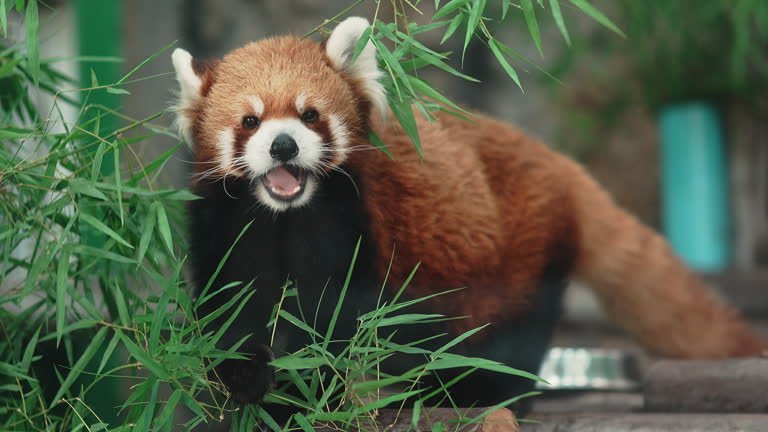
Red pandas are small, tree-climbing mammals with reddish-brown fur, a long, ringed tail, and flexible limbs built for life in cold mountain forests. Their body features help them balance, climb, and survive harsh Himalayan winters.
Researchers note that their thick coat, retractable claws, and a special wrist bone give them unique advantages in the wild. Early naturalists like Frédéric Cuvier (1825) even described them as one of the “most beautiful animals” due to their distinct color patterns.
Key Traits
- Reddish-brown coat with white-lined ears and a darker belly
- Body length: 20–25 in; Tail: 11–19 in
- Weight: 3–6 kg (7–33 lbs) — much smaller than the giant panda
- Bushy tail used for balance, warmth, and communication
- Flexible wrists + retractable claws for firm climbing grip
- Special wrist bone (“false thumb”) helps hold the bamboo
- Fur coloration blends with moss, trees, and rocky slopes
- Scent glands near the tail are used for marking territory
This compact mix of agility, camouflage, and climbing tools makes the red panda one of the most specialized tree mammals in the Himalayas.
Habitat & Distribution
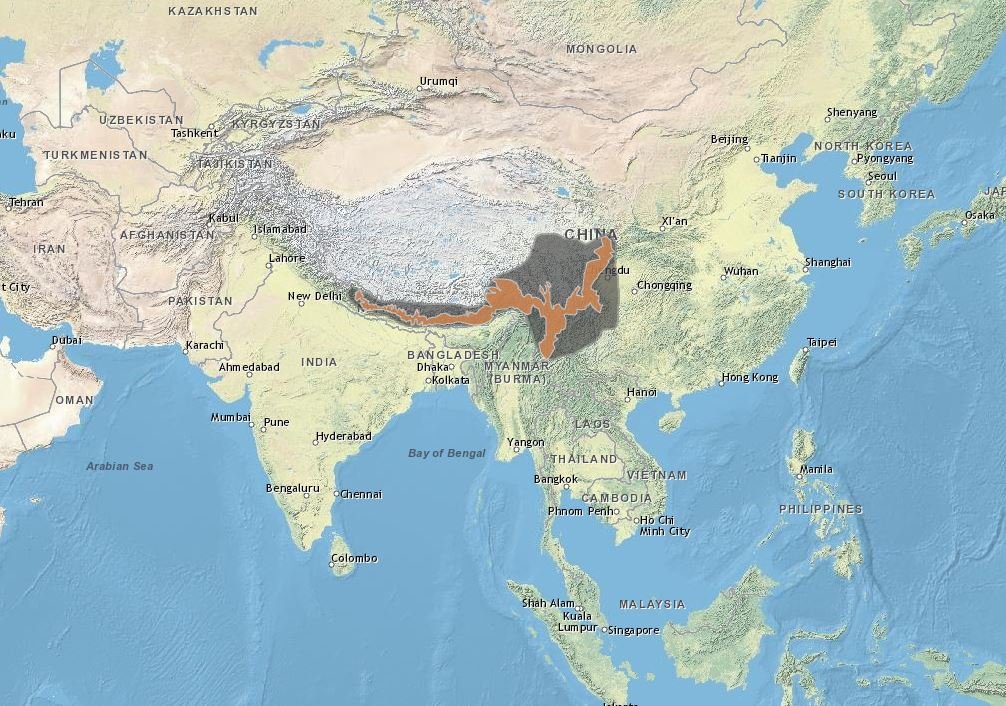
Red pandas live in cool, high-altitude forests across the eastern Himalayas and southwestern China. They stay in thick bamboo zones between 2,200 and 4,800 meters, where the climate stays misty, moist, and safe for an arboreal species.
Researchers note that red pandas are most common in Nepal, India, Bhutan, Myanmar, and China—exactly where temperate Himalayan forests overlap with dense bamboo. These forests offer tall trees for climbing and constant access to water sources, something biologists often highlight as a key survival factor. If you’ve ever walked through a Himalayan ridge at dawn, these are the same mist-covered slopes where red pandas quietly move from tree to tree.
Recent studies also confirm two major distribution groups: Ailurus fulgens fulgens (Nepal–India–Bhutan) and Ailurus fulgens refulgens (China). Their range looks small on a map, but every part of it supports the cool, shaded environment they depend on.
- Native range: eastern Himalayas + southern China
- Countries: Nepal, India, Bhutan, Myanmar, China
- Preferred habitat: temperate & subtropical bamboo forests
- Elevation: 2,200–4,800 meters
- Lifestyle: arboreal (tree-based)
- Habitat needs: bamboo cover, tree hollows, nearby water
- Distribution aligns with formally recognized subspecies
Behavior & Lifestyle
Red pandas live a calm, tree-centered life and spend most of their day high above the forest floor. They move slowly, stay alone, and follow a twilight activity pattern, which helps them stay safe in the cold Himalayan mountains.
Their arboreal lifestyle is shaped by the misty forests they live in. With a thumb-like wrist bone, curved claws, and flexible ankles, they climb branches with surprising ease—and even descend trees headfirst. Their reddish fur blends naturally with moss, lichen, and bark, giving them excellent camouflage against predators like snow leopards. Although they look gentle, they stay alert and mark their territory using scent glands on their chest and legs.
Key Behavioral Facts
- Spend around 90% of their time in trees
- Most active at dawn and dusk (crepuscular behavior)
- Sleep up to 18 hours a day
- Wrap their bushy tail around their body for warmth
- Use curved claws + wrist bone for climbing grip
- Can rotate ankles 180° to climb down headfirst
- Prefer to live alone and maintain large territories
- Communicate using scents, squeals, whistles, and soft grunts
- Camouflage blends with red moss, white lichen, and tree bark
Diet & Feeding
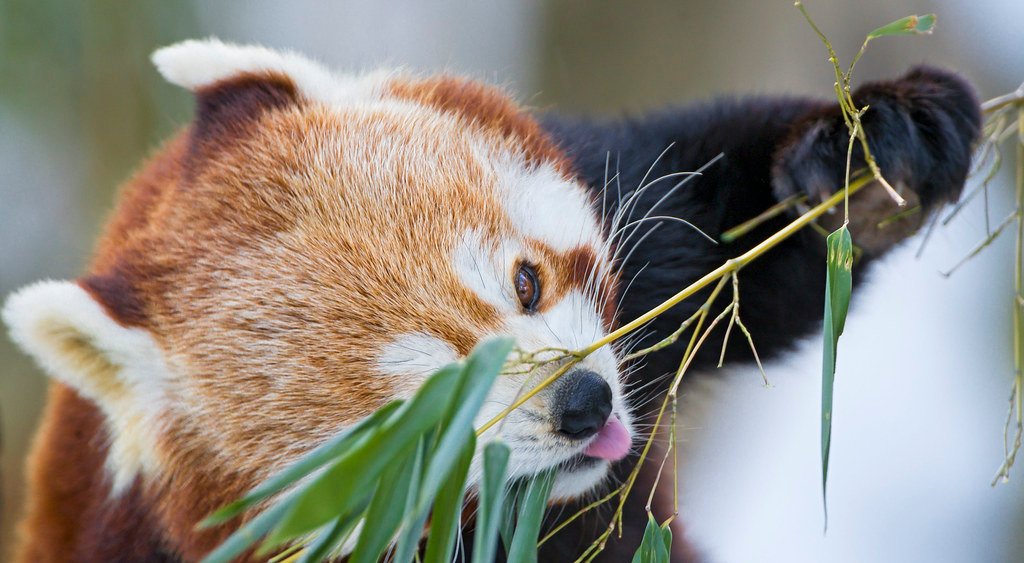
Red pandas survive on a low-calorie plant diet, even though they are classified as carnivores. Most of their food comes from bamboo, and they often eat enough to reach nearly 20–30% of their body weight in a single day.
Researchers note that red pandas can spend up to 13 hours a day foraging because bamboo gives very little energy. When you watch one feeding in a cloud forest, you’ll see how quietly it clips leaves using its sharp teeth and strong jaws. Their long gut and specialized digestive system help them break down cellulose, but they still need thousands of leaves to meet daily nutrition needs. When bamboo is less available, they shift to seasonal foods like fruits, berries, eggs, insects, and flowers.
Red pandas prefer areas with plentiful bamboo because competition with local wildlife can reduce their access. Experts observe that they often select young shoots and tender leaves since these offer slightly higher nutrients than mature stalks. This careful feeding behavior keeps them active in cool mountain forests with limited energy sources.
What Red Pandas Commonly Eat
- Bamboo leaves and shoots (about 70% of their diet)
- 1–2 kg of bamboo daily
- Up to 20,000 leaves per day in peak seasons
- Fruits, berries, acorns, flowers, roots
- Eggs, insects, small birds, and tiny mammals (occasionally)
- Seasonal plants available in cloud forests
Quick Comparison
| Food Type | Frequency | Notes |
| Bamboo leaves & shoots | Daily / primary | Low-calorie, main energy source |
| Fruits & berries | Seasonal | Adds sugars and vitamins |
| Acorns, roots, flowers | Occasional | Used when bamboo is limited |
| Eggs, insects, small animals | Rare | Extra protein when available |
| Bamboo shoots | Seasonal | Higher nutrition than mature leaves |
Reproduction & Lifespan
Red pandas have a slow reproductive cycle and only breed once a year, usually in the cold months when daylight changes. Most births happen between May and August, and mothers raise the cubs alone in a safe den made of twigs, leaves, and moss.
Experts observe that their mating behavior is calm and brief. Males and females interact more during the breeding season, leaving scent marks from the anogenital region and tail-flicking to signal readiness. Studies show that copulation can last from 2 to 25 minutes, using either a face-to-face or belly-to-back posture. After mating, the female enters a gestation period of about 131–134 days before giving birth.
When you watch a mother with newborns, you notice how slow and careful her parenting is. Cubs are born fully furred but blind, and they stay in the den for the first few weeks. Researchers note that cubs open their eyes at around three weeks and begin exploring by three months. They nurse for six to eight months, but true independence comes between 12 and 18 months, just before the next breeding season.
Reproduction Facts (Quick View)
- Breeding season: winter months
- Gestation period: 131–134 days
- Litter size: 1–4 cubs
- Cubs born blind and fully furred
- Eyes open in ~3 weeks
- Explore outside the nest at ~3 months
- Weaning: 6–8 months
- Independence: 12–18 months
Lifespan Overview
- 8–10 years in the wild
- 14–15 years in captivity
- Slow reproductive rate limits population recovery
Threats & Conservation
Red pandas are endangered because their forest homes are shrinking, bamboo is declining, and illegal hunting still occurs in some regions. Fewer than 10,000 remain in the wild, and experts warn that their population continues to fall as habitats break apart.
Main Threats
- Habitat loss from farms, cities, and road building
- Fragmented bamboo forests are reducing food and shelter
- Climate change is affecting bamboo growth
- Poaching for pelts, fur caps, and illegal sale
- Accidental deaths in traps set for wild pigs and deer
- Population decline across China, Nepal, India, Bhutan, and Myanmar
Unique & Lesser-Known Facts
Red pandas make unusual sounds like tweets, grunts, hisses, squeals, and a rare “huff-quack” call.
Their white face markings appear almost luminescent at night, helping mothers locate lost cubs in darkness.
Reddish tear tracks from their eyes to the mouth may protect them from sun glare in snowy forests.
They can enter a short “torpor” state to reduce their body temperature and respiration rate during extreme cold.
A single red panda can eat up to 20,000 bamboo leaves a day despite bamboo offering very low nutrition.
Young bamboo leaves are preferred because they’re tender and easier to digest.
Red pandas lick and groom themselves like house cats, even cleaning the bottoms of their feet.
Newborn cubs have very little fur; thick growth develops with age to survive chilly Himalayan habitats.
They wrap their long, bushy tails around their bodies to keep warm during deep sleep.
Their metabolic demands are low; conserving energy helps them survive in forests where food becomes scarce.
“Pabu” from Avatar: The Legend of Korra is designed after a red panda.
A red panda appears in Kung Fu Panda as a minor character, increasing global interest in the species.
Red pandas show up as mascots, characters, or Easter eggs in video games and regional brands.
The famous Darjeeling tea region uses the red panda as its official mascot.
Frequently Asked Questions
1. How many red pandas exist in the wild?
Fewer than 10,000 red pandas remain in the wild, according to conservation groups tracking their population. Researchers note that the number continues to decline due to habitat loss and poaching, making this species highly vulnerable.
2. Why are red pandas endangered?
Red pandas are endangered because their forest habitats in the eastern Himalayas and southern China are shrinking from farming, roads, and human expansion. Experts also report that poaching and climate change are affecting bamboo forests, adding extra pressure on their survival.
3. What do red pandas eat besides bamboo?
Although bamboo is their main food, red pandas also eat fruits, berries, acorns, insects, and small animals when available. Biologists observe that this varied diet helps them maintain energy during seasons when bamboo leaves are less nutritious.
4. How do red pandas survive cold climates?
Red pandas stay warm with thick reddish fur that covers even the soles of their feet. Experts explain that they curl their long, bushy tails around their bodies and slow their metabolism during freezing nights to conserve heat.
5. Where can you see red pandas in US zoos?
You can find red pandas in several accredited US zoos and breeding centers, including facilities that participate in conservation programs. Many zoos work with global organizations to protect this endangered species through education and managed breeding.
Conclusion
Red pandas may be small, but their story leaves a big impression. Learning these red panda facts reminds you how unique, fragile, and important these animals truly are. If you care about them, every bit of awareness and support helps protect their future. And the more we understand them, the better chance they have to stay safe in the wild.